
Key Takeaways
-
A good cabin heating system requires that coolant flow through the heater core is appropriate, the blower motor is healthy, and blend doors are operating properly. Coolant and leak checks help ensure constant heat during chillier temperatures.
-
A lot of cabin heat issues can be attributed to restricted coolant flow, blocked heater cores, or failing blower motors, giving symptoms of weak airflow, cold vents, or inconsistent temperatures. A nice-to-have heater core repair checklist: A simple checklist that covers coolant level, hose temperature, blower speeds, and vent operation can quickly narrow down the root cause.
-
Before you replace a heater core, it can be helpful to check for blockages from rust or old coolant deposits and do a gentle flush. By comparing inlet and outlet hose temperatures by feel and screening for debris or clogged passages, you can determine if cleaning or complete replacement is necessary.
-
Used heater cores Calgary can be a great way to save a lot of money as long as they are checked for pressure, punctured tubes, corrosion, and port geometry. Always double check part numbers, vehicle fitment, and ask for clear photos or check in person pre-purchase.
-
Opting for used OEM heater cores and blower motors, particularly those with a transparent mileage history and documented maintenance, can frequently provide superior fit and longevity compared to numerous cheaper aftermarket alternatives. Checking that the core carries OEM markings, has been pressure tested, and looks in good condition minimizes the risk of leaks and premature failures.
-
When ordering from places like Western Auto & Truck Parts in Calgary, these practical steps include giving complete vehicle info, confirming fit, and asking about inspection and testing procedures that help you guarantee solid, winter-ready heating performance.
Used heater cores Calgary are car heater components removed from previously-owned or wrecked automobiles and are marketed for repurchase at reduced prices. Thousands of drivers select used heater cores Calgary to reduce repair bills, keep aging vehicles moving and minimize auto part waste. Calgary winters and commutes require a working heater core for comfort and defogged windows. Local scrap yards, auto recyclers and online sellers typically test and grade these cores by condition, brand and fit for various makes. To select the correct one, consumers like to verify part numbers, rust, leaks and return policies, which the following sections describe in greater depth.
Cabin Heating Mechanics
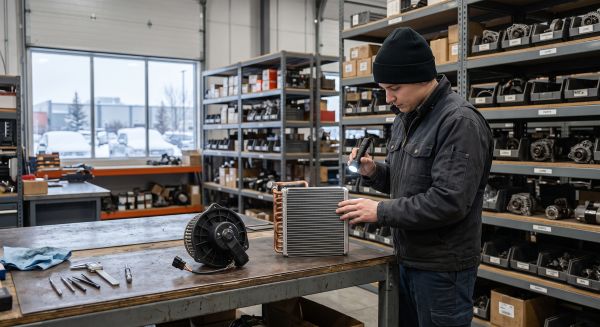
The cabin heat comes from the engines. Hot coolant exits the engine block, snakes through small hoses, and enters the heater core, a compact metal heat exchanger with copper piping and thin fins. As coolant passes through those pipes, it releases heat to the fins, and air flying over the fins absorbs this heat before it enters the cabin. If the heater core is clogged, leaking, or constructed from substandard materials that corrode quickly, the air will remain cold even though the engine is hot.
The blower motor and fan poise in the HVAC housing and shove air across the heater core, then out through floor, dash, or defrost vents. With a robust blower and a clear core, you feel solid warm air within minutes of starting the engine — exactly what a healthy system does in winter. Minimal airflow or air that inexplicably shifts from warm to cool typically indicates issues such as a failing fan motor, jammed bearings or clogged flow passages in the core.
HVAC controls complete the package. The control panel, cables or actuators, and blend doors determine how much air is flowing through the hot heater core versus bypass paths, which vents get air, and how fast the fan is spinning. Faulty HVAC valves and controls, broken blend doors or bad heater valves can all retain warm air even when coolant flow and blower appear fine. Proper fit of parts, clean coolant flow, and durable materials assist the entire setup in managing corrosion, vibration, and thermal cycling over years of usage.
Base components consist of the heater core, blower motor, blend and mode doors, coolant hoses, control panel, heater valve, thermostat, and water pump. Other major drivetrain components, including the transmission, also rely on proper fluid management and cooling to operate reliably. Classic heating troubleshooter suspects include low coolant, a leaky radiator or heater hose, vacuum leaks, a stuck thermostat, a bad heater core, a fan motor, or blower failure, all of which are often verified with specialized diagnostic equipment that measures pressures, flows, and electrical signals.
Coolant Flow
Coolant departs the engine, passes the thermostat and is sent by hoses down toward the firewall, where it flows in and out of the heater core. Inside the core, the hot coolant dissipates heat into the copper pipes and fins. It then returns cooled to the engine or radiator loop, maintaining temperature while the cabin heats.
Efficient cabin heating requires proper coolant levels and consistent circulation. Low coolant, trapped air, or a weak water pump restricts flow, so the core never gets hot enough and the cabin remains cold, even on extended drives.
Cabin heating mechanics in which limited coolant flow manifests as cold or barely warm air from vents, sluggish warm-up, or hot and cool swings in cabin temperatures with all normal engine gauges. Occasionally, there is a sweet smell in the car or a fogged windshield if the core itself leaks.
Basic inspections are checking for wet patches under the car or on the firewall, blown hoses and corrosion or sludge in the coolant expansion tank. A bad water pump, blocked heater hoses, or a jammed heater valve can all restrict flow. These things are easier to avert with periodic coolant flushes and circuit cleans.
Blower Motor
The blower motor’s job is simple. It pulls air from the cabin or outside, pushes it across the heater core, then sends it through the vents at the speed you choose on the control knob. Without sufficient airflow, even a piping hot heater core won’t warm the car, so the motor and its fan need to be in solid condition to help keep winter driving cozy.
Blower trouble symptoms include weak airflow at all settings, a fan that works only on one or two speeds, or does not respond when you adjust fan speed on the control panel. Sometimes there is a scraping or humming from worn bearings or a hot wiring smell if there is a fault. Worn brushes inside the motor, damaged wiring, or seized bearings are the usual culprits, and they can manifest first as airflow that diminishes over time rather than an imminent total failure.
One quick test is to go through every fan speed and every vent mode with the engine running and the heat on. If certain speeds are dead, your culprit may be the resistor or control module. If all speeds are weak, the motor itself, the fan cage, or even a clogged cabin filter may be to blame. Periodic inspections, combined with more extensive maintenance such as coolant flushes and repairing leaks promptly, ensure the blower, heater core, and controls all function in unison so the car warms up quickly to the set temperature and maintains it.
Diagnosing Cabin Heat Loss

Cabin heat loss usually comes from one of three areas: coolant flow through the heater core, airflow across it, or the blend door that mixes hot and cold air. This methodical approach minimizes guesswork and thus avoids replacing the wrong part, something that matters if you’re going to install a used heater core in Calgary or otherwise.
A simple order that works in most cases:
-
Check coolant level and look for leaks.
-
Verify the engine gets warm. A stuck thermostat will keep it cold.
-
Compare heater core inlet and outlet hose temperatures.
-
Check blower speed, airflow from vents, and cabin filter.
-
Test blend door operation and HVAC controls.
Classic heater system warning signs are weak or no heat, sticky greasy fog on the windshield, sweet coolant smell, and damp passenger side carpet. These can indicate a bad heater core, a leaky radiator or heater hose, a vacuum leak, heater valve failure, fan motor failure, low coolant, faulty HVAC valves and controls, or a broken blower motor.
For commercial vehicles in Alberta, the Commercial Vehicle Inspection Manual also addresses heater and windshield defroster operation and heater-core coolant leaks during inspection.
A quick comparison helps sort things out:
-
Bad heat and good air flow usually indicate coolant and/or heater core issues.
-
Powerful blow that is trapped cold or hot indicates blend door or control defects.
-
Little or no airflow, even with the fan on high, suggests a blower, resistor, wiring, or airflow blockage.
Coolant flow is key in any diagnosis because engine coolant courses through the heater core. A clogged core can choke circulation, so the engine may run hotter than normal, especially on long drives. When you suspect the core, consider fit and build quality. Coolant flow, appropriate fit, and good materials are important if you are swapping in a used part.
A practical checklist for cabin heat loss:
-
Coolant level and condition. Check for brown or cloudy coolant.
-
Engine temperature on the gauge.
-
Heater core hose temperature in versus out.
-
Blower function on all speeds.
-
Cabin filter and vent airflow.
-
Blend door response to temperature and mode changes.
Core Blockage
Diagnosing cabin heat loss. Core blockage occurs when rust, debris, or residual old coolant builds up in the minuscule heater core tubes. As the heater core is small and fragile, positioned quite far back in the dash, it tends to fail before other components. In most vehicles, a clogged heater core does more than kill cabin heat; it can impede coolant flow enough that the engine runs warmer than normal on extended drives, even if the radiator and water pump are otherwise in good shape. Brown, cloudy coolant, or coolant that has not been changed on schedule, increases the chance of internal deposits that constrict the channels.
Typical symptoms of a blocked heater core include:
-
Weak or no heat at idle, a little nicer when driving.
-
Heat is hot on one side of the cabin and cool on the other.
-
Heater hoses are both warm, but one is much hotter than the other.
-
Engine temperature creeping higher than usual on highways
-
Brown, rusty, or sludgy coolant inside the reservoir
-
Gurgling behind the dash as coolant struggles to flow through.
A quick means of diagnosing this is to carefully feel the inlet and outlet heater hoses once the engine has fully warmed and been shut off. If the inlet hose is very hot but the outlet is much cooler, coolant may not be flowing well through the core. If both hoses are lukewarm, check the thermostat or low coolant level. If blockage appears probable, a heater core flush makes a good initial step prior to dash-pulling replacement. Many shops attach a flushing tool to both heater hoses, run clean water or a mild cleaning solution through in both directions, and then refill with new coolant. If flow and heat aren’t better after a careful flush, replacement, new or used, becomes more realistic.
Airflow Failure
Airflow break is not the same as coolant issues. Here, the heater core could be hot and full of coolant, but when very little air flows over it, the cabin still feels cold. A bad blower motor, bad blower resistor, or damaged wiring can all reduce fan speed or prevent it altogether. For instance, if the blower only runs on high, the resistor is a usual culprit. If it doesn’t run at all, check power, ground, or the motor itself.
Electrical issues typically manifest as a fan that runs on some speeds but not others, comes and goes when you hit bumps, or does absolutely nothing despite the HVAC panel lights appearing normal. Mechanical issues tend to feel different. You might hear the fan spin but get barely any air because leaves or dust are packed in the fan cage, or the blower wheel is cracked and not moving air the way it should. Either way, the dash controls appear to function, but air volume to the vents is minimal.
A blocked cabin air filter is an easy, frequent culprit. Once the filter is loaded with dust, pollen, or road grit, airflow falls even with a healthy blower motor. Checking it is usually straightforward: open the filter housing, which is often behind the glove box or under the cowl, pull the filter, and look for heavy dirt or distortion. A dark, bent, or leaf-full filter replacement can return much of the lost flow right away.
Vent operation warrants a brief inspection. Turn the mode selector through floor, dash, and defrost settings and sense where the air emerges. If air volume is good from some vents and low from others, you may have a duct obstruction, a loose hose inside the dash, or a mode door problem separate from the blend door. Even something as basic as a misplaced floor mat or small object in a vent outlet can cut perceived airflow and make the heater seem weaker than it really is.
Blend Door
Your blend door controls the amount of air blowing through the hot heater core, versus bypassing it, so it directly controls cabin temperature. It oscillates between cold and hot circuits and frequently pauses at numerous points in-between, depending on your temperature knob or digital set. When this door or its controls break, the system can have loads of hot coolant and excellent airflow, but still cannot mix that air properly, which manifests as seemingly random or stuck temperatures at the vents.
Common signs of a blend door problem include air that stays cold even when the engine is warm and the control is set to maximum heat, or the opposite: constant heat even when you pick a cool setting. Others detect heat that cycles on and off with no adjustment, or one side of a dual zone system blowing warmer or cooler than the other. As the heater core is instrumental in defrosting the windshield, a bad blend door can leave the glass slow to clear even when set to defrost, which can be misinterpreted as a heater core problem on its own.
Both sound and movement provide helpful hints. Clicking, tapping, or a light ratcheting noise from behind the dash when you shift temperature or mode usually indicates a worn blend door actuator gear. If you toggle the temperature and hear the actuator, but the outlet temperature doesn’t change, the door itself might be stuck or jammed by debris, or its linkage may be broken. No sound at all, no temperature change, and no response from the vents can indicate a dead actuator, a blown fuse, or a control module fault rather than a mechanical jam.
Checking HVAC trouble codes if a scan tool is available is generally the first step in inspection, as some climate control units record faults for jammed doors or failed actuators. From there, visual inspections of the actuator motors and linkages, where access permits, can indicate if the actuator moves when the controls are operated. If the linkage doesn’t follow or the door shaft doesn’t turn, then the issue may be inside the HVAC box itself. Getting these things squared away prior to cursing the heater core is important, particularly when you’re considering the cost and hassle of replacing it, even with a used core.
Used Heater Cores Calgary
Used heater cores Calgary offer motorists a budget-friendly option to regain cabin warmth when a new core is scarce or costly. This can benefit owners of older or classic vehicles, where new parts may not be in stock, and appeals to motorists who seek to minimize repair costs but still value safety and reliability. Since heater cores can fail from corrosion, vibration, and constant hot-cold cycles, buyers need to see beyond the bargain price and concentrate on condition, fit, and evidence of testing.
|
Factor |
What to Check |
Why It Matters |
|---|---|---|
|
Part number / fit |
Exact match to OEM code, dimensions |
Prevents leaks, bad fit, and install delays |
|
Pressure testing |
Written or photo proof of test results |
Reduces risk of leaks after install |
|
Tubes and ports |
Straight, correct size, no cracks or bends |
Ensures hose seal and easy install |
|
Corrosion level |
Light surface only; no deep rust or soft spots |
Avoids early failure and coolant loss |
|
Donor history |
Mileage, age, and service records if possible |
Helps estimate remaining life of the core |
|
Visual condition |
Clean fins, no repairs, no old leak marks |
Filters out weak or patched parts |
|
Seller transparency |
Photos, honest answers, return policy |
Lowers risk with any used component purchase |
1. Core Pressure

A pressure-tested, used heater core is not going to leak once it’s buried behind the dash, where access is difficult and labor rates can be steep. A lot of Calgary recyclers and parts yards can run a pressure test with water or air at a specific number in kilopascals, then maintain it for a couple minutes to observe any drop or seepage. Consumers can request a picture of the test rig, a brief video demonstrating dry joints during testing, or at minimum a note on the invoice such as ‘passed pressure test at X kPa’. Once installed, symptoms of pressure failure typically manifest as a sweet coolant odor in the cabin, wet carpet near the firewall, or foggy side windows that fog quickly when you turn on the defroster. Any core with dried coolant stains, epoxy patches, solder blobs on tanks, or bent end caps are best avoided, even if the price is cheap, since repeating a heater core job usually costs more than getting a nicer used unit or even a new one to begin with.
2. Tube Integrity
The inlet and outlet tubes have to be straight, round and firmly attached to the header plate or the heater hoses won’t seal. Even small cracks, flat spots from over-tight clamps or twisted tubes can become leaks once the system warms and pressure builds.
Surface corrosion or pitting on the tubes is yet another warning sign. A bit of discoloration that wipes off is usually fine, but flaking metal, deep pits, or soft spots can stop the hose from gripping and break when you tighten the clamp. To check fit, simply compare tube diameter and length with the original core using a ruler or caliper, and match any flare or bead at the tube ends so the hose rests in the same location as it did from the factory.
3. Casing Corrosion
Surface rust on the tanks or casing can reveal a lot about the core’s lifestyle in the donor car. Light surface rust from age or storage can often be brushed off, but heavy scale, holes or soft metal along the edges indicate the core is nearing end of life. As heater cores are already subject to stress from thermal cycling, putting a badly corroded unit back into service can reduce its longevity. Be especially vigilant about mounting tabs, brackets, and seams, as these locations bear load and experience coolant flow. If they appear warped, cracked, or partially corroded, it is best to move on. Calgarians seem to have good luck with used heater cores, but those are usually cores with clean cases, dry seams, and no evidence of previous repair.
4. Port Geometry
Port geometry is how the tubes and connections are arranged, and it must fit your car’s plumbing or the hoses will kink or not reach. Match port size, shape, and angle to your old core, including any quick-connect fittings or O-ring grooves, because a slight mismatch can prevent the core from sitting properly in the HVAC box. If a port aims just a few degrees off, it could cause the hose to rub on sharp metal or plastic, leading to a subsequent leak. A quick comparison chart can assist, with rows for center-to-center distance between ports, tube outer diameter, bend angle, and distance from the mounting face, so you can compare your used core to your original piece before you purchase.
5. Mileage History
Donor car mileage or age helps you estimate how much service life remains in a used heater core. An 80,000 km core from a car that had regular coolant changes is typically safer than one taken from a high mileage vehicle with questionable service, even if they both look clean externally. Ask your seller for the donor’s odometer reading, year, and maintenance history and then balance that information against what you observe on the fins, tubes, and casing in addition to any pressure test evidence. Replacing a heater core can be tricky and most folks bring their car to a pro for the replacement. It frequently makes sense to spend a few extra bucks for a low-mileage, well-documented used core instead of taking a chance on the rock-bottom price. Other owners, particularly with older or rare models where new parts are limited, describe years of trouble-free use from used heater cores when they matched mileage history, diligent inspection, and proper testing prior to installing the part.
OEM Reliability Considerations
OEM heater cores count when you buy used in Calgary as they are what your vehicle came with from the factory. The goal is simple: keep the original heating performance without guesswork or trial and error.
OEM heater cores are from the very same manufacturer that supplied the factory. They use the same size, tube layout and fin design the system was engineered for. That means coolant flow, heat output and pressure limits remain consistent with what the vehicle manual anticipates. For a driver in a chilly city like Calgary, that can be the difference between clear windows on a snowy morning and a feeble, patchy defrost that always falls behind. With OEM, the core lines up with the heater box, hose connections sit in the right spot, and brackets match. This reduces strained hose bends, weird clamps, or tiny leaks that pop up 30 days later.
Used OEM heater cores typically wear better than new cheap aftermarket ones. A lot of factory cores use thicker metal, superior solder joints, and more stringent quality inspections. A five-year-old OEM core from a low-mileage vehicle could outlast a brand-new bargain core that trims cash up front but dies young. For example, thin aftermarket tubes can crack if coolant freezes or the system runs slightly over pressure. An OEM core, even used, is more likely to take that stress because it was designed with a safety margin that aligns with factory specifications.
If you purchase a used heater core, it aids in verifying that it is truly OEM. Check for the brand logo embossed into the tank, a sticker label, or a matching part number against the vehicle catalog. Most OEM cores display country of origin and obvious date codes. If the seller can’t show you any markings and the finish appears too generic, consider it a red flag. Distinct OEM IDs provide you a clearer alternative of how the mug should match and how it can work once fitted.
Winter Stress Factors
Calgary winters stress heater cores more than they realize. At -30 °C outside, the engine, coolant, and heater core all require additional time and energy to warm up to operating temperature. Alberta recommends safer winter highways by checking components including antifreeze, hoses, heaters and defrosters before winter driving. Thick, cold coolant travels slower through tiny heater core tubes, which is why any small gunk, rust, or air pocket immediately presents itself in the form of tepid cabin heat. Early mornings following crisp overnight plunges experience this most. If your heater core is already somewhat clogged or you run a borderline thermostat, the vents remain chilly and the windshield fogs when you require crystal clear glass the most.
Freeze stress appears first where coolant flow is close or irregular. If coolant is aged or contaminated by mixing with the incorrect type, freeze protection can deteriorate, resulting in the formation of ice crystals inside thin heater core tubes or small coolant passages. Even if it doesn’t freeze solid, slush impedes flow and creates pressure, increasing the likelihood of leaks at hose connections and on old solder joints on used heater cores. In slow, stop-and-go city traffic, low airflow and low engine speed emphasize these weak spots, as there is less spare heat and less coolant circulation to mask them.
Routine coolant checks minimize these dangers prior to winter. A simple pre-season check in autumn, checking coolant strength, level and for traces of oil or rust, provides more opportunity to catch trouble while components are still easy to source. Seasonal checkups of the complete cooling system catch heater core problems associated with a leaky radiator, vacuum leaks that misdirect blend doors, and jammed thermostats that keep coolant too cool for effective cabin warmth. Overlooking a poor defroster or faint coolant scent from within can cause coolant vapor on glass, worsened fogging in moist air and abrupt heat loss on a shadowy winter commute.
Seasonal checkups of the complete cooling system catch heater core problems associated with a leaky radiator, vacuum leaks that misdirect blend doors, and jammed thermostats that keep coolant too cool for effective cabin warmth. Winter inspections can also include other vehicle systems, such as suspension components, which may experience additional stress from cold temperatures, potholes, snow and rough road conditions.
All too common winter headaches usually signify upgrade time. If you’re still chasing dribbles of leaks, topping up coolant, or struggling with weak defrost on cold mornings, a newer or higher-capacity heater core and fresh hoses can be more affordable than another band-aid solution.
Sourcing Verified Components

Finding verified used heater cores in Calgary is more important than you think. The heater core resides within the cabin, with hot coolant flowing through tiny tubes and fins. If this valve goes, you lose cabin heat, have fogged windows, and even coolant leaks on the floor. Verified components reduce the risk of premature failure, safety problems, and double work expenses.
Western Auto & Truck Parts has been one of Calgary’s most reliable sources for used heater cores and blower motors. They salvage parts from decommissioned vehicles, then refurbish and test them prior to selling. Such a procedure is critical as the used market can be rife with low-cost, unverified, or even fake components. A junky eBay listing could have the right shape but inferior materials or clogged coolant passages that halve the life of the part and cause additional repairs.
It’s not just the size of their inventory they’re worth; it’s how they match parts. While a lot of vehicles use the same heater core across trims and years, minor variations in line routing, bracket style, or inlet and outlet size can cause fitment issues. Staff who know these cross-references can lead you toward a core that fits the housing, lines up with the hoses, and works well with the blower motor and blend doors without weird seams or forced kinks.
To assist them in doing that, you must provide full vehicle information when inquiring about inventory. Handy information to have on hand includes make, model, year, engine size in liters, body style, and if the car has dual zone climate control or rear heat. With this, they can verify part numbers, compare ports and mounting points, and prevent “close, but no cigar” matches that cause leaks or inadequate cooling.
Key steps for sourcing verified components:
-
Confirm the seller’s testing and inspection process
-
Share exact vehicle details and climate control options
-
Check for correct fit, coolant flow, and clean cores
-
Ask about return or warranty terms in writing
-
Prefer known distribution networks over unknown online sellers
-
Balance price with proven quality and long-term reliability
Conclusion
Used heater cores Calgary make sense if you keep smart about risk, price and chilly weather needs. One cheap part can feel wonderful at the counter, then become a fast failure in a week of −20 °C mornings. A clean, pressure-tested core with clear fins and no coolant stains sells a stronger narrative than a bargain basement price. A shop that tracks donor mileage and provides a brief trial run demonstrates genuine concern as well.
To finish, consider used versus new, inquire about how the yard tests every core, and fit the part to your winters, not solely your budget. Any local yard or shop you trust in Calgary? Call and inquire how they test heater cores and shop around before you purchase.
Frequently Asked Questions
How does a heater core keep my cabin warm in Calgary winters?
The heater core operates as a diminutive radiator. Hot engine coolant circulates through it, and a fan blows air across the core into the cabin. In those cold Calgary winters, a healthy heater core is the key for safe visibility and comfort.
What are common signs my heater core is failing?
Look out for feeble cabin heat, misty windows, a sugary coolant scent or moist carpets beneath the dash. You can experience low coolant levels. These are red flags to check that heater core and related parts, pronto.
Is it safe to use a used heater core in Calgary?
It’s safe if the part is tested, pressure-checked, and visually inspected. PURCHASE ONLY FROM RESPECTED CALGARY RECYCLERS OR AUTO DISMANTLERS THAT GUARANTEE THEIR SERVICE! We sell warranty verified used heater cores that can be as reliable and a fraction of the cost of new.
Should I choose OEM or aftermarket for a replacement heater core?
OEM heater cores meet original specifications and will often fit and perform more reliably. Fine, quality aftermarket units can work too, but it’s a crapshoot. Harsh Calgary winters have a way of teaching us all a lesson, and many local drivers choose OEM or OEM-equivalent parts for reliable cabin heat and longevity.
How do Calgary winters affect my heater core?
Extremely cold temperatures will add to heater core workload. The coolant remains colder and the system runs longer and harder. Any restriction, corrosion, or leak stands out that much more. Routine coolant changes and inspections go a long way toward protecting the heater core in winter.
Where can I find verified used heater cores in Calgary?
Find authentic used heater cores Calgary from certified dismantlers, parts yards, and online dealers displaying Calgary stock. Watch out for pictures, sound return policies, test reports, and part compatibility checks with your car.
What should I ask before buying a used heater core in Calgary?
Inquire regarding pressure testing, leak checks, corrosion level, mileage of the donor vehicle and warranty terms. Check fit with your VIN. Ask for pictures if purchasing online. Having clear answers to these questions cuts down on the danger of early death.